
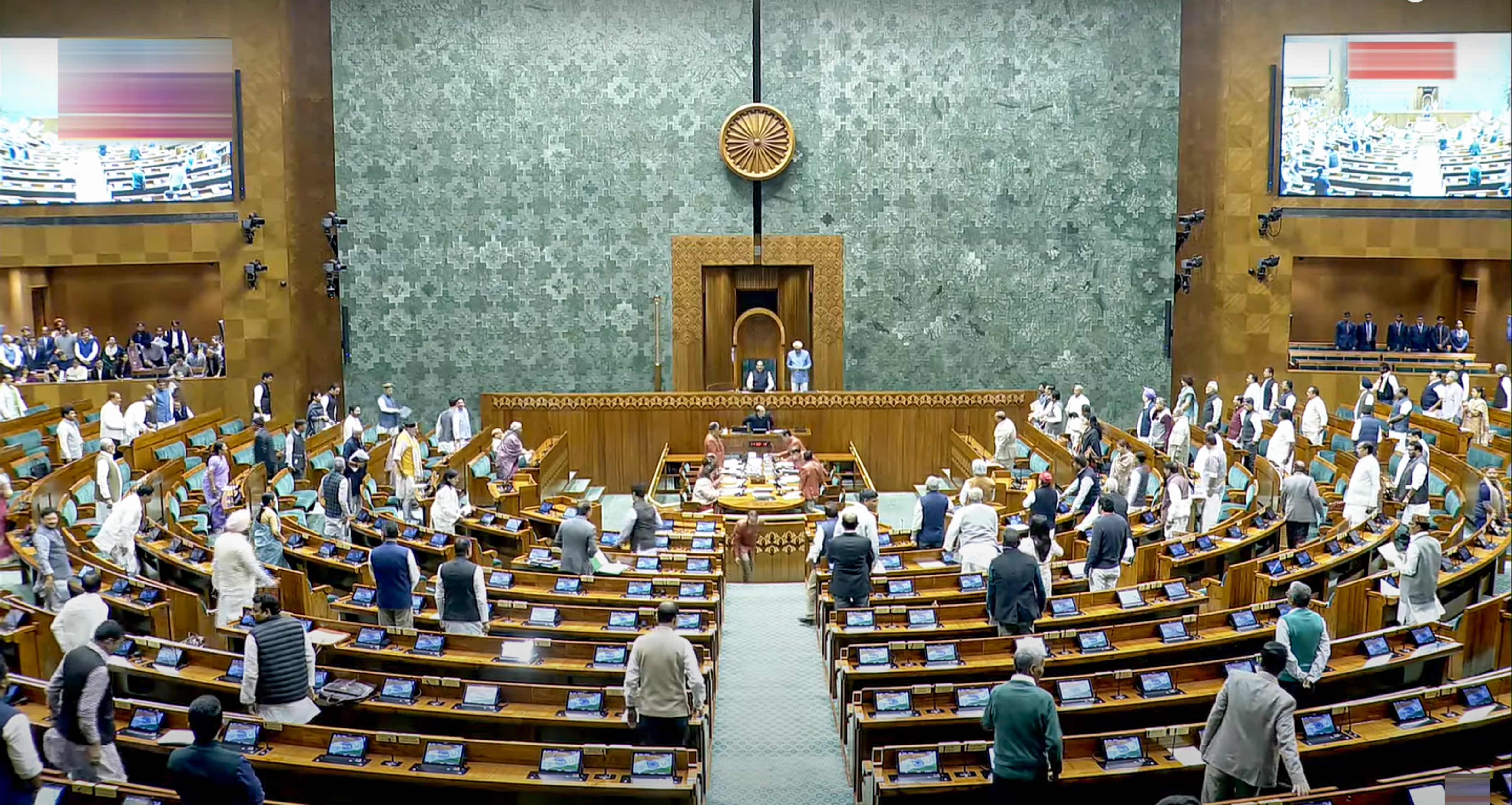
The Indian government introduced the Constitution (131st Amendment) Bill, 2026 in Parliament on April 16, proposing to expand the Lok Sabha from 543 to 850 seats and enable immediate delimitation to activate the 33% women's reservation. Voting is scheduled for April 18. But southern states, the Opposition, and constitutional experts are raising alarms — and the reasons go far deeper than politics.
India's Parliament is rewriting itself here is what that actually means
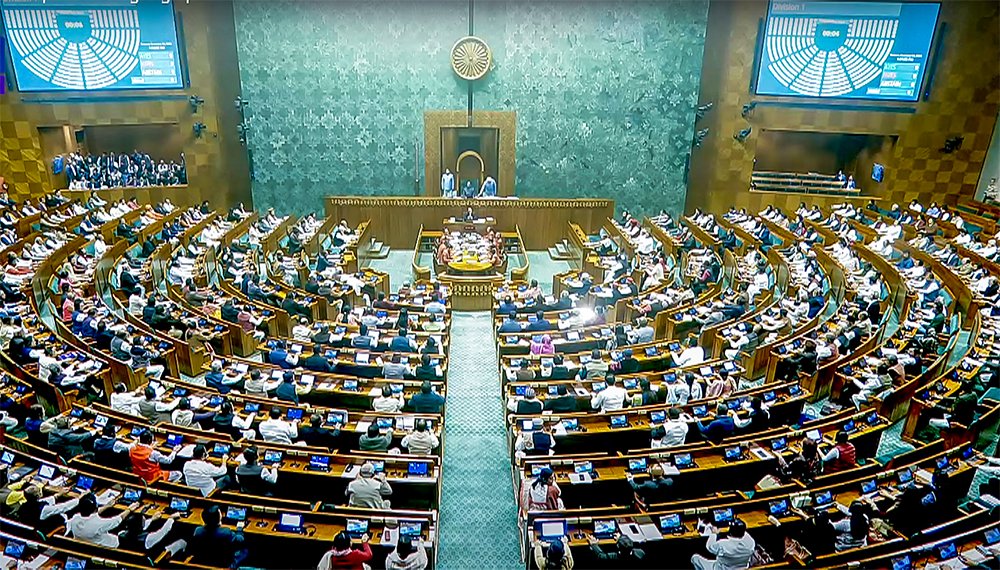
New Delhi, April 16, 2026 For over fifty years, the number 543 has defined Indian democracy. That is how many seats exist in the Lok Sabha the lower house of Parliament and that number has been frozen since 1971, locked in place by a constitutional provision designed to avoid punishing states that controlled their population growth. On Thursday, the Modi government walked into Parliament and introduced a Bill that proposes to change that number permanently to 850. If passed, it would be one of the most significant structural changes to Indian democracy since the Constitution was written.
The Constitution (131st Amendment) Bill, 2026 was introduced by Law Minister Arjun Ram Meghwal during a special three-day Parliament session called specifically to fast-track these changes between April 16 and 18. The government has issued a three-line whip to all BJP MPs meaning attendance is mandatory, no leave permitted. Voting on the Bill, along with two companion pieces of legislation the Delimitation Bill, 2026, and the Union Territories Laws (Amendment) Bill, 2026 is scheduled for 4 PM on Friday, April 18.
Three Bills, one massive reshuffle of political power
Understanding why this matters requires understanding what each of the three Bills actually does. The 131st Amendment Bill changes Articles 81, 82, and 334A of the Constitution. Article 81 currently sets the maximum Lok Sabha strength at 550 the Bill raises that ceiling to 850, with 815 seats for states and 35 for Union Territories. Article 82 currently requires delimitation to happen only after a census conducted after 2026. The Bill removes that requirement entirely, allowing Parliament to use the 2011 Census data right now. Article 334A a provision first introduced through the 106th Amendment defines 33 percent reservation for women in the Lok Sabha and state assemblies. Activating that reservation is the government's stated justification for this entire exercise. The Delimitation Bill, 2026, sets up a fresh Delimitation Commission headed by a sitting or former Supreme Court judge alongside the Chief Election Commissioner. The Union Territories Bill realigns seat allocations for places like Jammu and Kashmir, which gets 114 seats with 24 left vacant for territories under Pakistani administration.
The south is watching and it does not like what it sees
Here is the fault line that is generating the most heat, and the one that most national headlines are glossing over. India's southern states Tamil Nadu, Kerala, Telangana, Karnataka, Andhra Pradesh have, over the past five decades, done exactly what the government asked of them: they lowered their birth rates, improved literacy, reduced poverty, and built stronger economies. As a reward for that responsible governance, they are now staring at the prospect of losing political representation in Parliament. Because this delimitation is based on population, the northern states which have higher populations due in part to slower demographic transition stand to gain significantly more seats. Tamil Nadu Chief Minister M.K. Stalin has already announced black-flag protests across the state. Kerala Chief Minister Pinarayi Vijayan called it a "hurried attempt to carry out delimitation under the guise of administrative reform" and a direct threat to India's federal structure. Telangana's Revanth Reddy wrote to Prime Minister Modi saying the move "will affect the future of our democracy and country."
Is women's reservation the real goal or the cover story?
This is the question the Opposition is hammering loudest. The INDIA bloc, led by Congress, has been careful not to oppose women's reservation itself leaders like Rahul Gandhi, Mallikarjun Kharge, and P. Chidambaram have repeatedly said they support the Nari Shakti Vandan Adhiniyam of 2023. What they are opposing is the specific route the government has chosen to activate it. Congress's P. Chidambaram described the 131st Amendment as a "mischievous and diabolical move" that will shrink southern states' representation. The Opposition has also pointed out that draft Bills were shared with MPs only two days before the special session a direct violation of the government's own 2014 Pre-Legislative Consultation Policy, which requires 30 days of public consultation before any major legislation goes before Parliament.
Numbers game: Can the government win the vote?
The BJP has 298 seats in the Lok Sabha and controls a clear majority with its NDA alliance partners TDP with 16, JD(U) with 12, Shiv Sena with 7, LJP with 5, and YSRCP with 4. The Opposition's INDIA bloc has Congress with 98 seats, Samajwadi Party with 37, TMC with 28, and DMK with 22. Four independents remain undecided. A constitutional amendment requires a two-thirds majority of members present and voting. The government almost certainly has the numbers but the political cost of passing a Bill that southern India sees as a threat to its voice in New Delhi may take years to calculate fully. The next general election is in 2029. By then, if this Bill passes, the map of Indian democracy will look very different.