
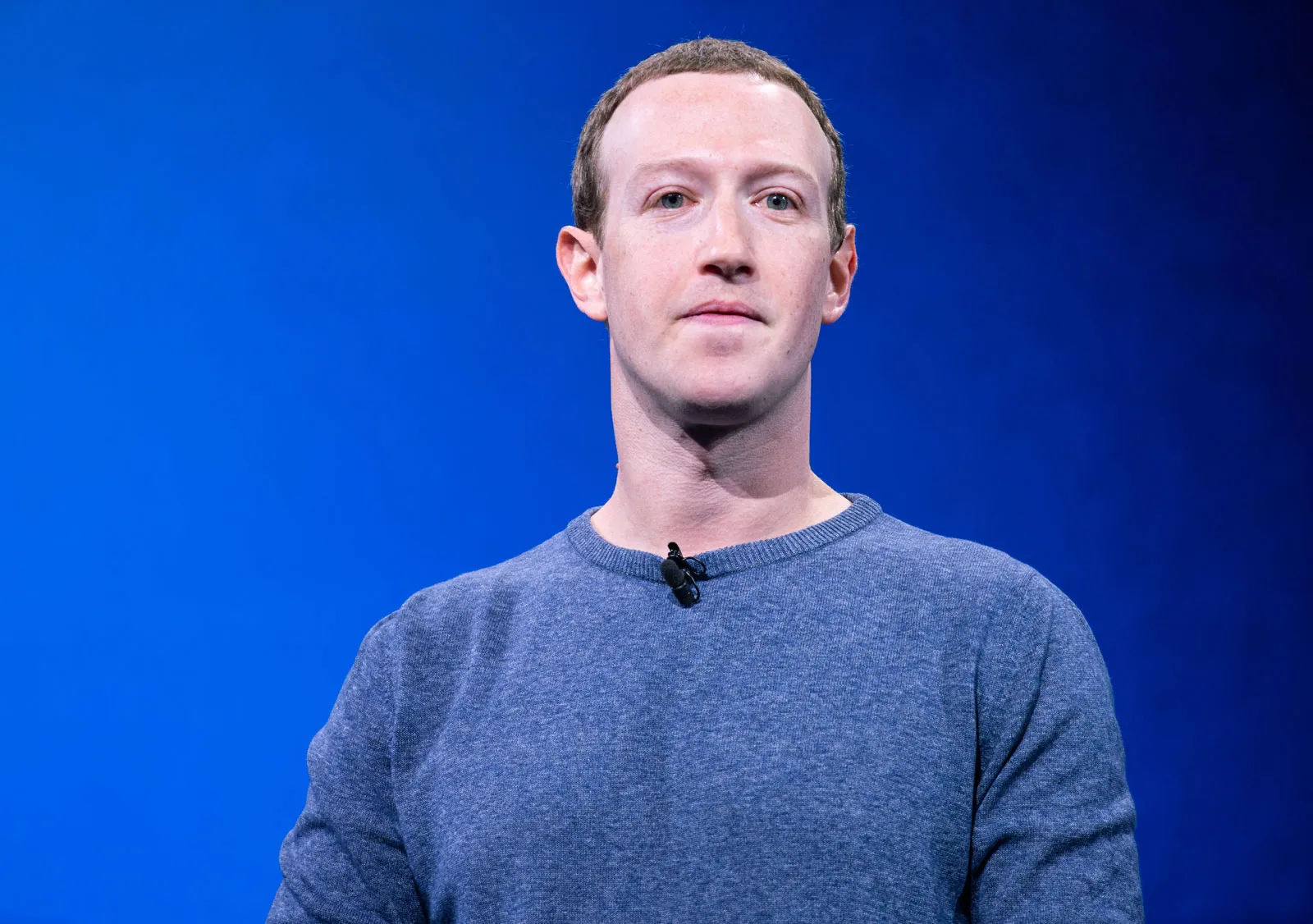
Mark Zuckerberg once declared Meta would be "the most forward-leaning company on remote work at our scale." On May 20, 2026, he handed pink slips to 8,000 employees roughly 10% of the global workforce the same week the company reported its most profitable quarter in history. Between the broken promise of remote work, the $145 billion AI bet that is eating the workforce alive, and a compensation system that rewards a handful of AI researchers while cutting everyone else's pay, this is the full story of how Zuckerberg remade Meta in his own image and who paid the price.
San Francisco / Mumbai | May 20, 2026 — There is a particular kind of corporate irony that only Silicon Valley can produce at scale. And today, Meta delivered it with breathtaking precision.
On May 20, 2026 the very day that Mark Zuckerberg's company began handing out termination notices to approximately 8,000 employees, eliminating roughly 10% of its entire global workforce Meta's Q1 2026 results were still glowing in everyone's feed: $56.31 billion in revenue, $26.8 billion in net income, the fastest revenue growth the company has posted since 2021. It was simultaneously the most profitable quarter in Meta's twenty-two-year history and the single biggest mass layoff the company has conducted since its 2023 restructuring.
Welcome to the world Mark Zuckerberg built and is now aggressively dismantling and rebuilding on his own terms.
The Promise That Started Everything
To understand what is happening at Meta today, you have to travel back to May 2020. The world was in lockdown. Offices were empty. And Mark Zuckerberg, speaking with the confidence of a man who had just watched his platforms become more essential than ever, made a declaration that would define his legacy in an unexpected way.
"We are going to be the most forward-leaning company on remote work at our scale," Zuckerberg told employees. He predicted that within five to ten years, roughly half of Meta's workforce could be operating permanently from home. He called it a "thoughtful and responsible plan." He talked about how remote work would democratise access to talent globally, reduce inequality of opportunity, and make Meta stronger. He was, for a brief moment, the poster child of the new workplace.
That statement marked a significant era in which Zuckerberg boasted about Meta's embrace of remote work, claiming the company would become "the most forward-leaning company on remote work at our scale."
The employees who restructured their lives around that promise moved to cheaper cities, bought homes outside the Bay Area, made childcare decisions based on the flexibility remote work offered did not know they were building their futures on a foundation that would be torn up within three years.
The U-Turn: From Remote Prophet to Office Enforcer
The reversal began quietly, then loudly.
In early 2023, amid the first round of mass layoffs 10,000 jobs cut in what Zuckerberg branded the "Year of Efficiency" the CEO began signalling discomfort with how remote work was functioning in practice. Internal data, he said in a memo, showed that engineers earlier in their career perform better on average when they work in-person with teammates at least three days a week.
By June 2023, Meta formally told office-assigned employees they would need to come in three days a week from September. The policy was a significant U-turn from Zuckerberg's pandemic-era assertions, with Meta threatening to discipline including termination anyone who failed to comply with the return-to-office mandate. Employees who showed up found themselves unable to book conference rooms. Adam Mosseri, head of Instagram, admitted publicly that Meta had "not yet figured out hybrid work."
The man who had promised to be the most forward-leaning CEO on remote work was now tracking employees' keycard swipes to enforce office attendance. Meta, under Zuckerberg's push for "efficiency," also eliminated perks including free laundry and dry-cleaning services and shifted dinner service later in the evening, effectively requiring employees to stay longer to benefit.
The message, stripped of corporate language, was simple: the pandemic era is over, the power has shifted back to the employer, and Meta intends to use that power fully.
The Layoff Timeline: How 33,000 Jobs Disappeared
The May 2026 round of 8,000 cuts did not arrive in a vacuum. It is the latest chapter of a culling that has been methodical and relentless.
Since 2022, Zuckerberg has overseen the elimination of roughly 33,000 positions. The November 2022 round of 11,000 cuts was framed as correcting pandemic-era over-hiring. The 2023 round of 10,000 was the "Year of Efficiency." Early 2025 saw 3,600 cut in performance-based terminations though some affected employees had received ratings of "at or above expectations."
In January 2026, Meta laid off around 1,500 virtual reality workers as it mothballed the failed Reality Labs division. In March 2026, a further 200 positions were cut from recruiting and other support functions.
And then came April 23 the memo from Chief People Officer Janelle Gale that landed like a grenade in every Meta Slack channel. The company announced it was slashing about 10% of its 78,000-person workforce and closing around 6,000 open job postings. The memo said the cuts would help "run the company more efficiently" and "offset the other investments we're making."
Those other investments, it turned out, cost $145 billion.
The AI Machine That Is Eating the Workforce
Here is the number that explains everything: Meta raised its full-year 2026 capital expenditure guidance to between $125 billion and $145 billion nearly double what it spent in 2025, and more than it spent in 2024 and 2025 combined.
The money is flowing into Nvidia GPUs, custom AI chips built with Broadcom on a 2-nanometre process, data centres so power-hungry that Meta is exploring space-based solar energy to feed them, and a $27 billion infrastructure deal with Nebius. At the midpoint of $135 billion, 2026 capex represents roughly 50% of trailing-twelve-month revenue putting Meta in the upper range of capex intensity for the entire megacap cohort.
The strategic logic is not subtle. Meta plans to transfer roughly 7,000 employees into new AI-related groups — Applied AI Engineering, Agent Transformation Accelerator, and Central Analytics focused on building AI agents capable of handling coding, research, analytics, and operational tasks that have historically been done by human workers.
In other words: the company is not eliminating jobs because business is bad. It is eliminating jobs to fund the machines it believes will replace those jobs permanently.
At the Q1 earnings call, Zuckerberg was explicit about one thing and evasive about another. He insisted that "getting everyone internally to use AI tools and getting to do work more efficiently is not the thing that's driving layoffs." He did not, however, offer an alternative explanation and the silence has fuelled anxiety that more cuts are coming. At a recent town hall, Zuckerberg told employees the cuts were a direct consequence of AI infrastructure costs and declined to rule out further reductions in the second half of the year.
Record Profits, Falling Pay: The Two-Speed Meta
The cruelest dimension of the May 2026 layoffs is the timing. The cuts arrive on the heels of one of the most lucrative quarters in the company's history: $56.31 billion in revenue and $26.8 billion in net income for the first three months of 2026. Revenue grew 33% the fastest growth rate since 2021, well above the high end of management's own guidance. Diluted EPS of $10.44 jumped 62% year-over-year and crushed consensus by 54%.
The company ended Q1 sitting on $81.18 billion in cash, cash equivalents, and marketable securities.
Yet for the employees being shown the door and for the ones who survived compensation has been quietly deteriorating. Median compensation at Meta fell from $417,400 in 2024 to $388,200 in 2025. The stock portion of raises was cut 5% in February 2026, on top of a 10% cut the year before.
At the same time, the company that cannot find money to protect median employee compensation is spending extravagantly on a chosen few. Zuckerberg has been personally recruiting AI researchers with compensation packages reportedly reaching $100 million to staff Meta Superintelligence Labs, the division he launched last summer under former Scale AI chief Alexandr Wang.
The result is a company where the gap between elite AI hires and the broader workforce is widening by the quarter and where, some employees are openly hoping to be laid off to collect 16 weeks of severance. That sentence alone tells you something profound about the state of morale inside one of the world's most profitable companies.
The New Performance Architecture
Alongside the layoffs, Meta has quietly rebuilt its internal performance evaluation system to make future culling more structural and less confrontational than the "low performer" framing it used in January 2025.
Employees are now categorised into four tiers: the top 20%, the middle 70%, a lower 7%, and the bottom 3%. Top performers with "truly exceptional impact" can receive up to significantly enhanced compensation packages. The bottom tiers face performance improvement plans, reduced bonuses, or exits. The language shifted from "low performers" to "contribution" and "efficiency" an acknowledgment that the people being let go are not necessarily underperforming, but rather that their roles no longer fit the AI-first company Zuckerberg is assembling.
The Stock's Complicated Reaction
Investors watching META shares through May have had to hold two contradictory ideas simultaneously. The Q1 results by any pure financial measure were extraordinary. Operating income of $22.9 billion held at a 41% operating margin even as expenses grew 35%. Ad impressions grew 19%. Average price per ad expanded 12%.
But the capex guidance raised twice in a single calendar year, now sitting at an eye-watering $145 billion midpoint produced a 9% pre-market drawdown when it was first disclosed, as investors grappled with what it means that Meta is committing nearly 50% of annual revenue to infrastructure spending with no clear monetisation timeline for personal superintelligence.
META stock has recovered partially since then. But the volatility reflects a genuine analytical debate: is Zuckerberg the most disciplined capital allocator in technology, or the most reckless? The answer will only become clear when or if the AI bets pay off.
What This Tells Us About Power, Work, and the Future
The arc of Zuckerberg's relationship with remote work is not just a corporate story. It is a case study in how quickly workplace power can shift and how little permanent the promises of a pandemic-era tech boom actually were.
In 2020, employees had leverage. Companies needed talent. Remote work was the price of admission. By 2026, the power has fully reversed. The workplace landscape has undergone a dramatic reversal, with nowhere more visible than the swift rollback of remote-work policies across major employers. Inflation, a cooling labour market, and the emergence of AI as a credible replacement for knowledge work have together handed the advantage back to employers and companies like Meta have not been shy about using it.
For the 8,000 people losing their jobs today at the company Zuckerberg built, none of that strategic analysis is particularly useful. What they know is simpler: the CEO who told them remote work was the future built an office-attendance policy, then automated their jobs, then handed them a severance package on the most profitable day in the company's history.
That is the story of Meta in May 2026. And it is not finished yet.
Disclaimer: This article is for informational and educational purposes only and does not constitute investment advice. Readers are encouraged to conduct their own research and consult a registered financial advisor before making investment decisions.




_1775073585.webp)