

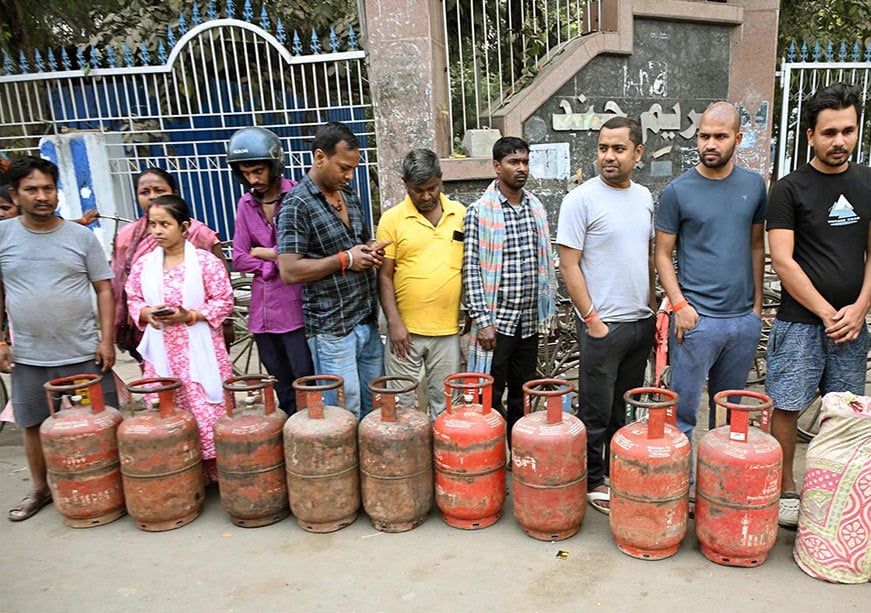
India’s cooking gas supply outlook improves as two Indian-flagged LPG carriers, Jag Vasant and Pine Gas, successfully transit the highly sensitive Strait of Hormuz amid geopolitical tensions in West Asia. Carrying over 92,000 tonnes of LPG, the vessels are expected to reach Indian ports within days, offering much-needed relief to the country’s strained energy supply chain.
India’s energy supply chain has received a significant boost at a time of heightened global uncertainty, as two Indian-flagged liquefied petroleum gas (LPG) carriers — Jag Vasant and Pine Gas — have successfully navigated the strategically critical Strait of Hormuz. The development comes as a major relief for millions of households and industries dependent on cooking gas, especially amid ongoing geopolitical tensions in West Asia. According to official data and ship-tracking insights, the two vessels are carrying more than 92,000 tonnes of LPG and are expected to arrive at Indian ports between March 26 and March 28. This quantity is equivalent to nearly a day’s national consumption, underlining the importance of the shipment for stabilizing supply. The Strait of Hormuz, one of the world’s most critical maritime chokepoints, connects the oil-rich Gulf region to global markets. Nearly 20% of the world’s oil and a significant portion of liquefied gas supplies pass through this narrow corridor. However, recent tensions involving Iran and Western nations have disrupted shipping routes, causing delays, increased insurance costs, and heightened risk for vessels. In this volatile backdrop, the successful transit of Jag Vasant and Pine Gas signals a cautious but crucial resumption of energy movement. The ships reportedly followed a route close to the Iranian coastline, which has been used by other vessels with clearance from Iranian authorities, ensuring safer passage through the region. The Indian government has been closely monitoring the situation, particularly because nearly 90% of India’s LPG imports pass through the Strait of Hormuz. Any prolonged disruption in this route can have immediate and widespread implications for domestic fuel availability, pricing, and inflation. The two vessels were among several Indian ships that had been stranded in the Persian Gulf following the escalation of tensions in the region. At one point, over 20 Indian-flagged vessels, including LPG carriers, crude oil tankers, and container ships, were unable to move due to safety concerns and geopolitical uncertainties. However, recent coordinated efforts between maritime authorities and diplomatic channels appear to be yielding results. The safe transit of these vessels suggests that mechanisms are being established to ensure continued flow of energy supplies despite the crisis. For India, the stakes are particularly high. LPG is not just a fuel; it is a lifeline for millions of households across urban and rural areas. Government schemes aimed at increasing LPG penetration have significantly raised dependence on imported cooking gas. Any disruption, therefore, directly impacts daily life — from household cooking to commercial food services and small-scale industries. Reports from various cities have already indicated stress on the supply chain. In some regions, delays in cylinder delivery and rising refill costs have forced businesses, especially restaurants and street vendors, to seek alternatives such as electricity or piped natural gas. The arrival of Jag Vasant and Pine Gas is expected to ease some of this pressure. Industry experts believe that steady inflow of shipments over the next few weeks could stabilize prices and reduce waiting times for consumers. At the same time, the broader geopolitical context remains uncertain. The situation in West Asia continues to evolve, with tensions impacting not only energy supplies but also global financial markets. Shipping routes remain under surveillance, and any escalation could again disrupt movement through the Strait of Hormuz. Despite these challenges, India has demonstrated resilience in managing its energy logistics. Earlier this month, other LPG carriers successfully crossed the strait and delivered supplies to ports in Gujarat, showcasing the country’s ability to adapt to rapidly changing conditions. The government is also exploring contingency measures, including diversifying supply sources and enhancing domestic production capacity. These steps are aimed at reducing dependency on any single route or region and ensuring long-term energy security. Another key aspect of the current situation is the role of Indian seafarers. The two vessels reportedly have dozens of Indian crew members onboard, highlighting the human element behind the country’s energy supply chain. Ensuring their safety in conflict-prone regions remains a top priority for authorities. As the ships move closer to Indian shores, attention will shift to port operations and distribution networks. Efficient unloading and transportation will be critical to ensure that the LPG reaches consumers without further delays. In the coming days, more vessels are expected to follow, indicating a gradual normalization of maritime traffic in the region. While challenges remain, the successful transit of Jag Vasant and Pine Gas marks a positive step forward. For consumers, this development brings hope of improved availability and potentially stable prices. For policymakers, it underscores the importance of strategic planning and international cooperation in safeguarding energy supplies. Ultimately, the episode serves as a reminder of how deeply interconnected global energy systems are — and how events thousands of kilometers away can directly impact everyday life in India.
The successful movement of Jag Vasant and Pine Gas through the Strait of Hormuz is not just a routine shipping update — it represents a critical turning point in India’s ongoing struggle to maintain energy stability during one of the most volatile geopolitical phases in recent years. To understand the significance of this development, it is essential to examine the broader context. The Strait of Hormuz has long been considered one of the most sensitive maritime corridors in the world. Any disruption here sends shockwaves across global energy markets, affecting oil and gas prices, shipping costs, and supply chains. In recent weeks, escalating tensions in West Asia have led to a near halt in tanker traffic through the strait. At one point, up to 95% of vessels were reportedly unable to pass through due to security threats and uncertainty. This created a bottleneck that not only impacted India but also several other energy-importing nations. Against this backdrop, the safe transit of Indian vessels is a sign that carefully negotiated passage routes and coordinated maritime strategies are beginning to take effect. The use of specific navigation corridors, along with real-time monitoring, has helped mitigate risks. The cargo carried by Jag Vasant and Pine Gas — over 92,000 tonnes of LPG — is substantial. In practical terms, this amount can supply millions of households for several days, depending on consumption patterns. For a country like India, where LPG demand has been steadily rising, every shipment counts. The increase in demand is largely driven by government initiatives aimed at providing clean cooking fuel to households. Over the past decade, India has significantly expanded LPG coverage, reducing reliance on traditional fuels such as firewood and coal. While this has positive environmental and health impacts, it also increases dependence on imports. This dependency makes India vulnerable to global disruptions. The current situation in the Gulf region highlights this vulnerability, as delays in shipments can quickly translate into shortages and price hikes. In response, authorities have been working on multiple fronts. These include diplomatic engagement with countries in the region, coordination with shipping companies, and deployment of naval assets to ensure safe passage for vessels when necessary. There is also a growing emphasis on diversifying energy sources. India has been exploring alternative suppliers and investing in infrastructure for liquefied natural gas (LNG) and renewable energy. While these measures will take time to fully materialize, they are crucial for long-term resilience. The role of ports and logistics networks is equally important. Efficient handling of incoming shipments can significantly reduce delays and ensure timely distribution. Ports across India, including those on the western coast, are preparing to handle increased traffic as more vessels arrive. Meanwhile, market dynamics are also being closely watched. Global oil and gas prices have shown volatility in recent days, influenced by geopolitical developments and supply uncertainties. Any stabilization in shipping routes could help ease these fluctuations. Experts believe that if the current trend continues, India could see a gradual improvement in LPG availability over the next few weeks. However, they also caution that the situation remains fragile and dependent on geopolitical developments. Another critical aspect is consumer behavior. During periods of uncertainty, panic buying and stockpiling can exacerbate shortages. Authorities have urged citizens to avoid unnecessary hoarding and rely on the assurance of incoming supplies. From a strategic perspective, the episode underscores the importance of energy security in national planning. Ensuring uninterrupted access to essential fuels is not just an economic priority but also a social necessity. The successful transit of Jag Vasant and Pine Gas also highlights the importance of international cooperation. Navigating through a conflict-prone region requires coordination between multiple stakeholders, including governments, shipping companies, and maritime agencies. Looking ahead, the focus will be on maintaining this momentum. Additional vessels are expected to follow similar routes, gradually clearing the backlog of shipments stranded in the Gulf. For India, the lessons from this episode could shape future policies. Strengthening domestic production, expanding storage capacity, and building strategic reserves are likely to gain more attention. At the same time, advancements in technology — such as real-time tracking and predictive analytics — could play a key role in managing supply chains more effectively. Ultimately, the story of Jag Vasant and Pine Gas is not just about two ships crossing a strait. It is about resilience, strategy, and the ability to navigate challenges in an interconnected world. As these vessels approach Indian ports, they carry more than just LPG — they bring reassurance to millions of households and a reminder of the complex systems that keep the nation running.