
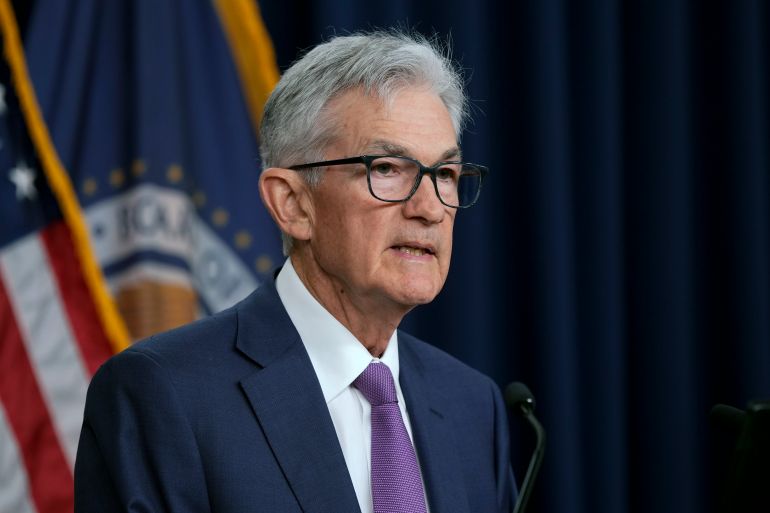
The US Federal Reserve has kept interest rates unchanged in its March 2026 policy meeting, highlighting ongoing inflation concerns and global uncertainties. Chair Jerome Powell emphasized a cautious, data-driven approach, with limited chances of aggressive rate cuts in the near term.
The US Federal Reserve has once again decided to pause its interest rate cycle, keeping benchmark rates unchanged during its March 2026 Federal Open Market Committee (FOMC) meeting. The move reflects the central bank’s ongoing effort to strike a balance between controlling inflation and supporting economic growth. Federal Reserve Chair Jerome Powell indicated that while inflation has eased compared to previous peaks, it still remains above the desired target. As a result, policymakers are not rushing into rate cuts and prefer to monitor economic data more closely in the coming months. Global economic conditions have also added to the cautious stance. Rising geopolitical tensions and fluctuating energy prices are creating uncertainty, making it difficult for the Fed to commit to a clear rate-cut timeline.
Looking ahead, the Federal Reserve signaled that any future rate adjustments will depend heavily on inflation trends, employment data, and global developments. While some market participants had earlier expected multiple rate cuts in 2026, the latest signals suggest a more gradual and limited easing cycle. Economic growth in the United States remains relatively stable, supported by consumer spending and business activity. However, there are early signs of moderation in the labor market, which could influence future policy decisions. Financial markets reacted cautiously to the announcement. Investors are now recalibrating expectations, with many anticipating that any rate cuts may be delayed until there is stronger evidence of sustained inflation control. Overall, the Fed’s latest decision highlights a wait-and-watch strategy, where stability remains the priority amid a complex global economic environment.