
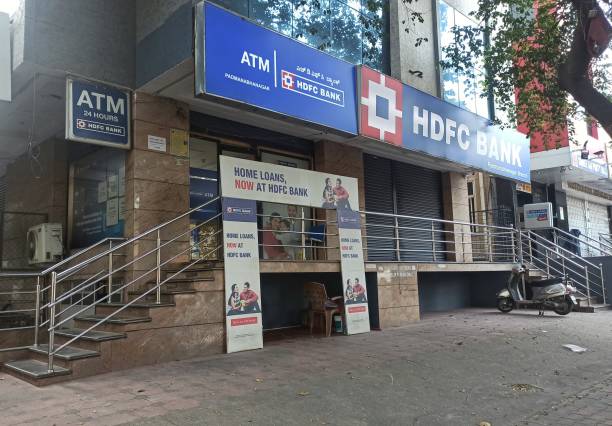
After a sharp sell-off triggered by the sudden resignation of chairman Atanu Chakraborty, HDFC Bank shares have staged a notable recovery. Investors are regaining confidence as regulatory reassurance and leadership clarity ease governance concerns.
India’s banking giant HDFC Bank has witnessed a dramatic turnaround in market sentiment after its shares rebounded for the second consecutive session. The recovery comes days after a sudden leadership shake-up that initially rattled investors and wiped out significant market value. The turbulence began when former chairman Atanu Chakraborty stepped down abruptly, citing differences related to “values and ethics.” The unexpected move triggered panic across Dalal Street, sending the bank’s stock plunging nearly 8–9% in a single trading session — one of its steepest declines in recent years. Market participants were caught off guard not only by the resignation but also by the ambiguity surrounding the reasons behind it. The absence of detailed clarification fueled speculation about internal governance issues and possible friction between the board and management. However, as the dust began to settle, confidence slowly returned. A key factor behind the rebound has been reassurance from the Reserve Bank of India, which stated that it found no material concerns regarding the bank’s financial health or governance practices. This statement played a crucial role in calming investor nerves, as it confirmed that the issue was more of a leadership disagreement rather than a systemic operational problem. Additionally, the appointment of seasoned banker Keki Mistry as interim chairman has added a layer of stability to the situation. Market analysts believe the rebound reflects a classic case of “panic selling followed by value buying.” With HDFC Bank being fundamentally strong and well-capitalized, investors quickly identified the dip as a potential opportunity. Despite the recovery, experts caution that the episode has left behind important questions. Governance transparency and communication from the leadership will remain critical factors influencing investor sentiment in the coming weeks. The incident has also highlighted how sensitive markets are to leadership changes, especially in institutions considered systemically important. In the broader context, HDFC Bank continues to be a cornerstone of India’s financial ecosystem. Its scale, customer base, and post-merger strength make it a key player in both domestic and global banking narratives. While short-term volatility persists, the long-term outlook remains anchored in strong fundamentals.
The rebound in HDFC Bank shares is more than just a technical recovery—it reflects a deeper recalibration of investor expectations following a moment of uncertainty. In the immediate aftermath of the resignation of Atanu Chakraborty, the market reaction was swift and severe. The bank lost nearly ₹1 lakh crore in market capitalization within hours, underlining the magnitude of investor concern. But what followed is equally significant. Within two trading sessions, the stock began to regain lost ground, signaling that institutional investors were stepping back in. This suggests that the market views the leadership change as a temporary disruption rather than a structural weakness. A major contributor to this shift has been clarity from both regulators and the bank’s management. The Reserve Bank of India not only dismissed concerns about governance lapses but also reaffirmed the bank’s strong liquidity and capital position. Meanwhile, the bank’s internal leadership has actively countered rumors of any “power struggle,” emphasizing that operations remain stable and unaffected. From an investor’s perspective, such reassurances are crucial. In large financial institutions, leadership exits often raise red flags about internal conflicts or hidden risks. However, in this case, the consistent messaging has helped contain the fallout. Market experts now point toward valuation attractiveness as another reason for the rebound. After the sharp correction, HDFC Bank’s stock entered a zone that many analysts consider undervalued relative to its long-term growth potential. That said, challenges remain. The banking major is already navigating pressures such as margin compression, integration complexities post its mega merger, and evolving macroeconomic conditions. The leadership episode adds another layer of scrutiny, especially around governance standards and board-management alignment. Looking ahead, the key triggers for sustained recovery will include: Clear communication from leadership Stable governance signals Consistent financial performance Progress on merger synergies If these factors align, HDFC Bank could not only recover fully but also regain its premium valuation in the market. For now, the rebound serves as a reminder of how quickly sentiment can shift in financial markets. What began as a sharp crisis has transitioned into a test of resilience—and so far, HDFC Bank appears to be passing it.